Surgical guides for missing teeth, without the CAD work.
For tooth-supported cases: one or more missing teeth, with neighbouring teeth still in place. The guide seats on those teeth, its fit taken directly from the intraoral scan.
How a case runs
- 1
Upload two scans
A CBCT (DICOM or NIfTI) and an intraoral scan (STL). The two are aligned automatically, without clicking landmarks.
- 2
AI segments the anatomy
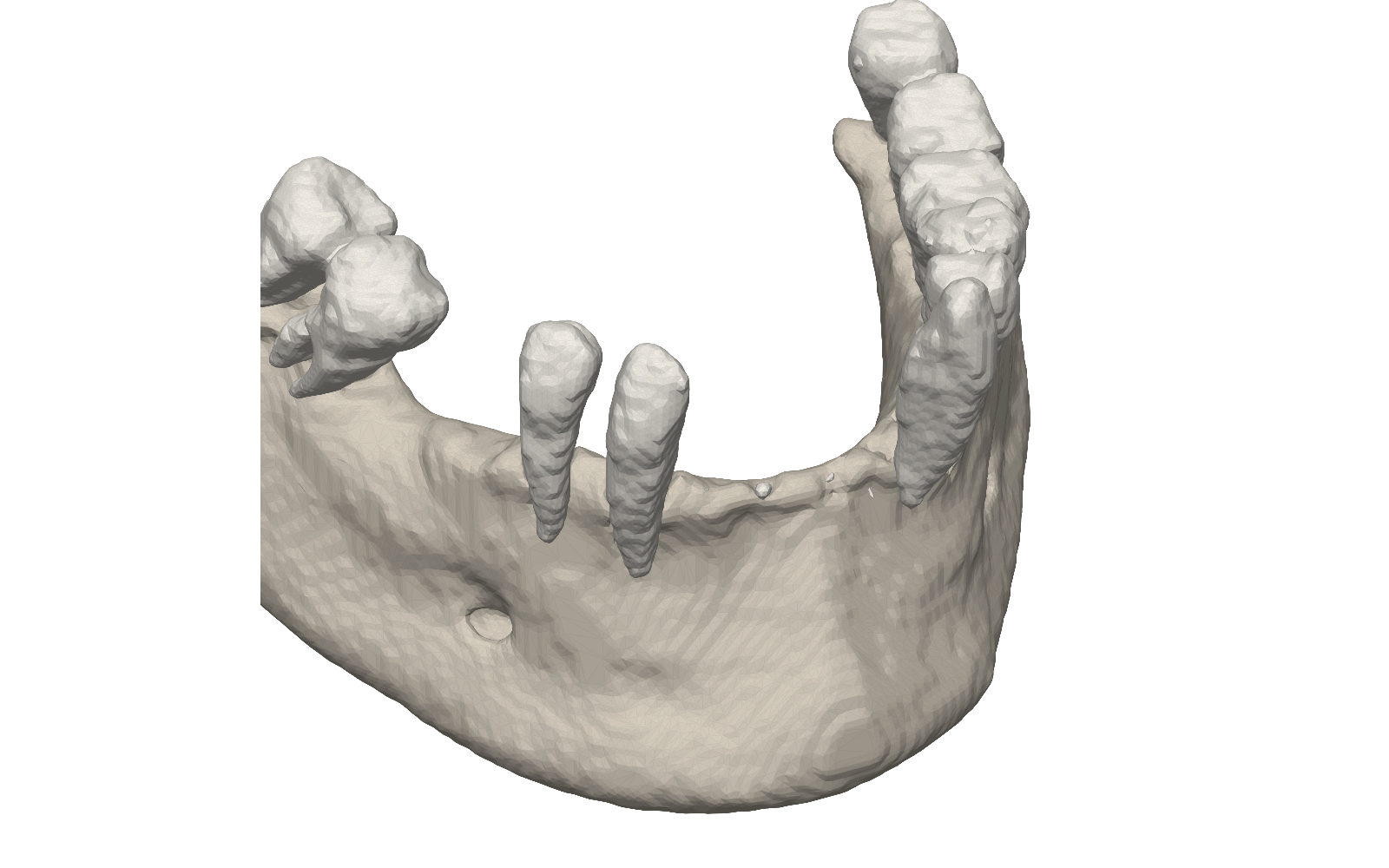
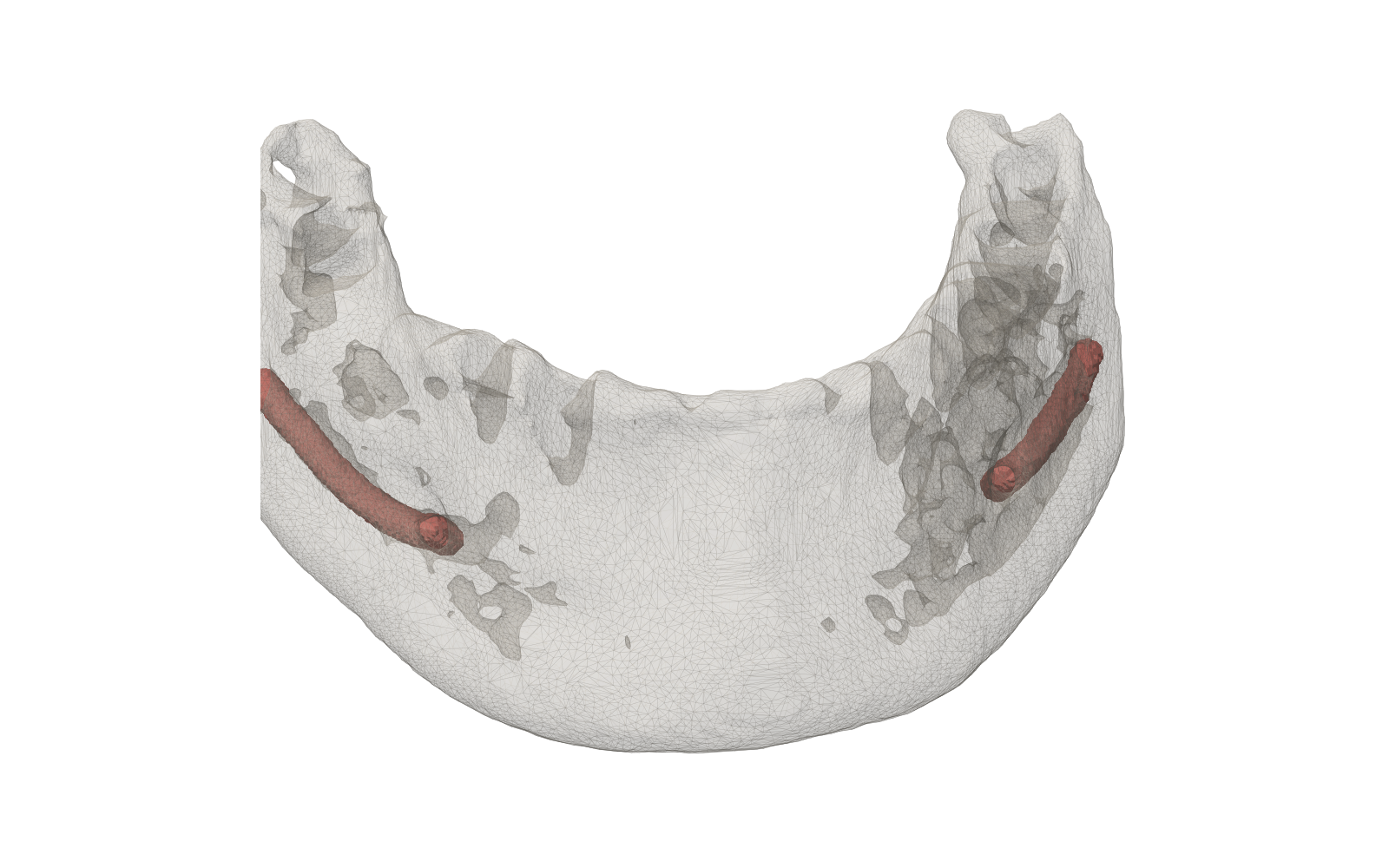
Bone, every tooth and the nerve canal become separate 3D models, about 30 seconds of compute.
- 3
The engine plans each implant
Position, angle, depth and size are searched together, around 500 candidates per site, each scored against 14 clinical rules.
- 4
You review and approve
Every placement shows its scores and the alternatives that did worse. Change a site or an implant and replan.
- 5
Download the guide
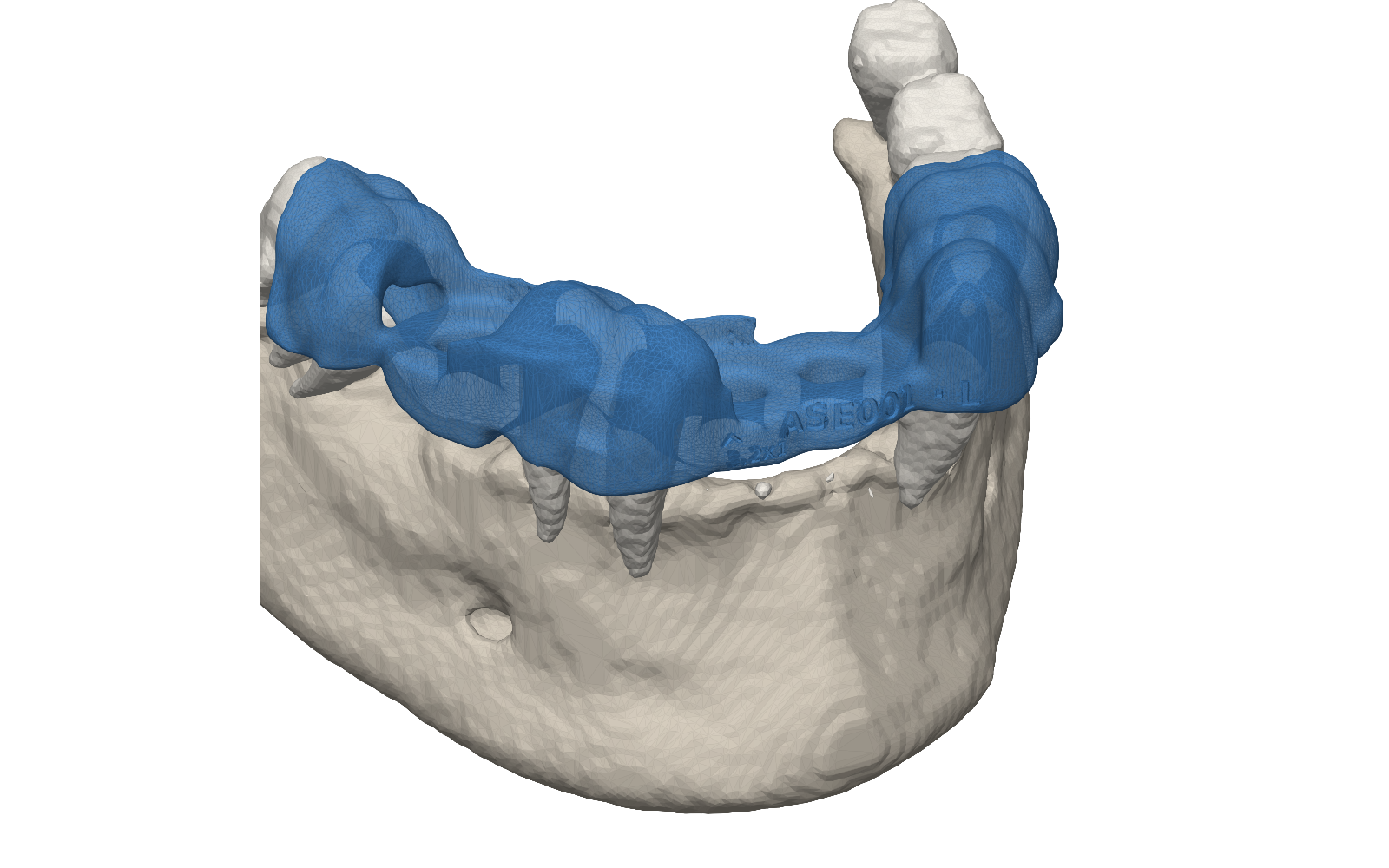
A watertight, printable guide with drill sleeves at the planned angles, plus the drill protocol.
What you get back
- Printable guideSTL
- Watertight STL, ready for a resin printer.
- Drill protocolPDF
- The drill sequence for each site, as a document for the surgery.
- Score logJSON
- Each rule's measured value for every placement: why it was accepted.
- Case dossierPDF
- Segmented anatomy, the approved plan and the guide, together.
Coming next: full-arch. Pin-fixated guides for edentulous arches, with their own safety engine, are in development.
See it run on one of your own cases.
Send us an anonymised CBCT and intraoral scan. We run it live with you and show where the software agrees with your plan, and where it does not.